Moorish occupation of the Iberian Peninsula 摩尔人对伊比利亚半岛的占领
The Moorish occupation of the Iberian Peninsula—spanning nearly 800 years from 711 to 1492—didn’t just change the course of Spanish history; it fundamentally reshaped Western civilization. Known as Al-Andalus, this era was characterized by a synthesis of cultures that turned Spain into the intellectual and economic powerhouse of Europe.
摩尔人对伊比利亚半岛的占领,从公元711年持续到1492年,长达近800年,它不仅改变了西班牙历史的进程,更从根本上重塑了西方文明。这个被称为“安达卢斯”(Al-Andalus)的时代,其特点是多种文化的融合,使西班牙成为欧洲的知识和经济强国。
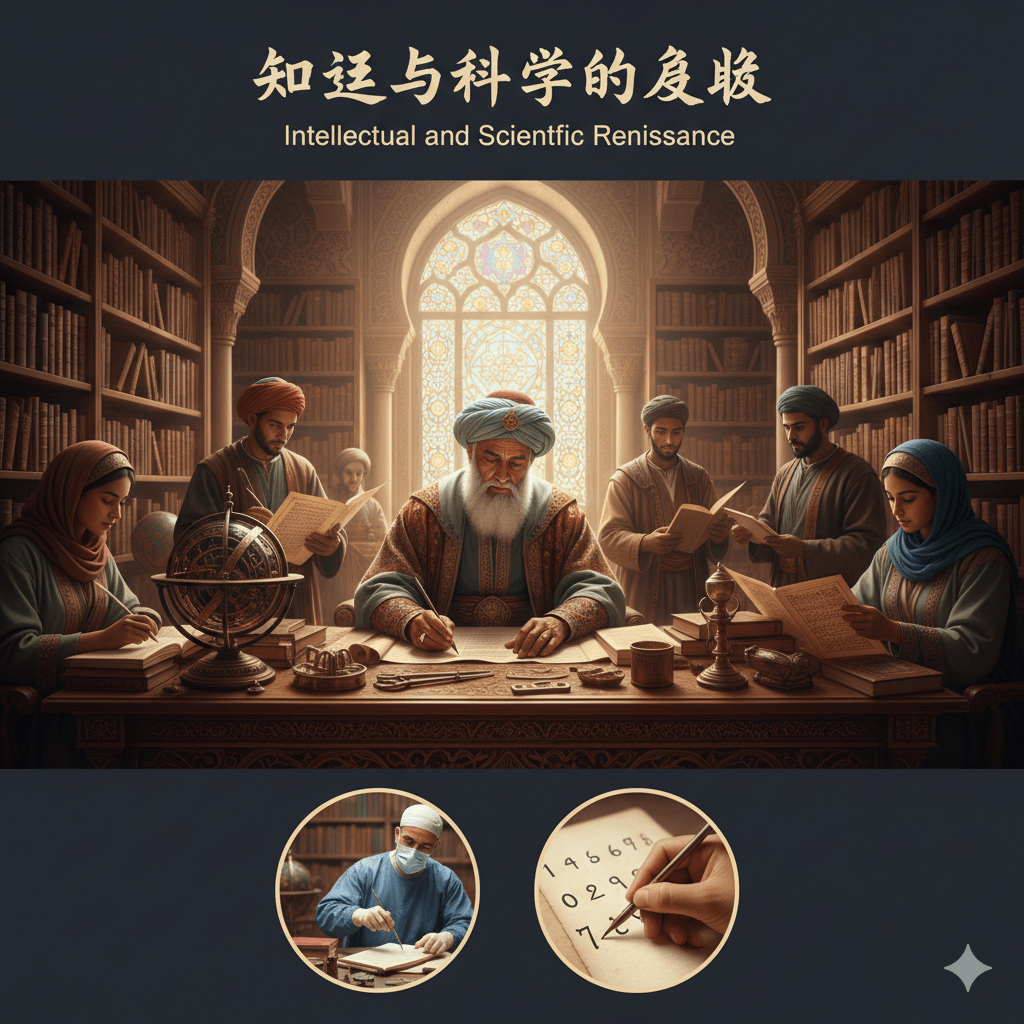
1. While the rest of Europe was navigating the “Dark Ages,” Al-Andalus was a beacon of enlightenment. The Moors introduced advanced knowledge from the Hellenistic and Islamic worlds, much of which had been lost to the West. 知识与科学的复兴 (Intellectual and Scientific Renaissance)当欧洲其他地区处于“黑暗时代”时,安达卢斯却是启蒙的灯塔。摩尔人引入了来自希腊化和伊斯兰世界的先进知识,其中许多知识在西方世界已经失传。
数学与天文学 (Mathematics & Astronomy): 他们引入了印度-阿拉伯数字(0-9),取代了笨重的罗马数字系统,并在代数和三角学方面取得了显著进展。
医学 (Medicine): 像阿尔-扎赫拉维(“现代外科之父”)这样的先驱开发了外科器械和技术,这些在几个世纪中一直是标准。
哲学 (Philosophy): 像伊本·鲁世德(Averroes)这样的学者翻译并评论了亚里士多德的著作,弥合了古希腊思想与后来欧洲文艺复兴之间的鸿沟。
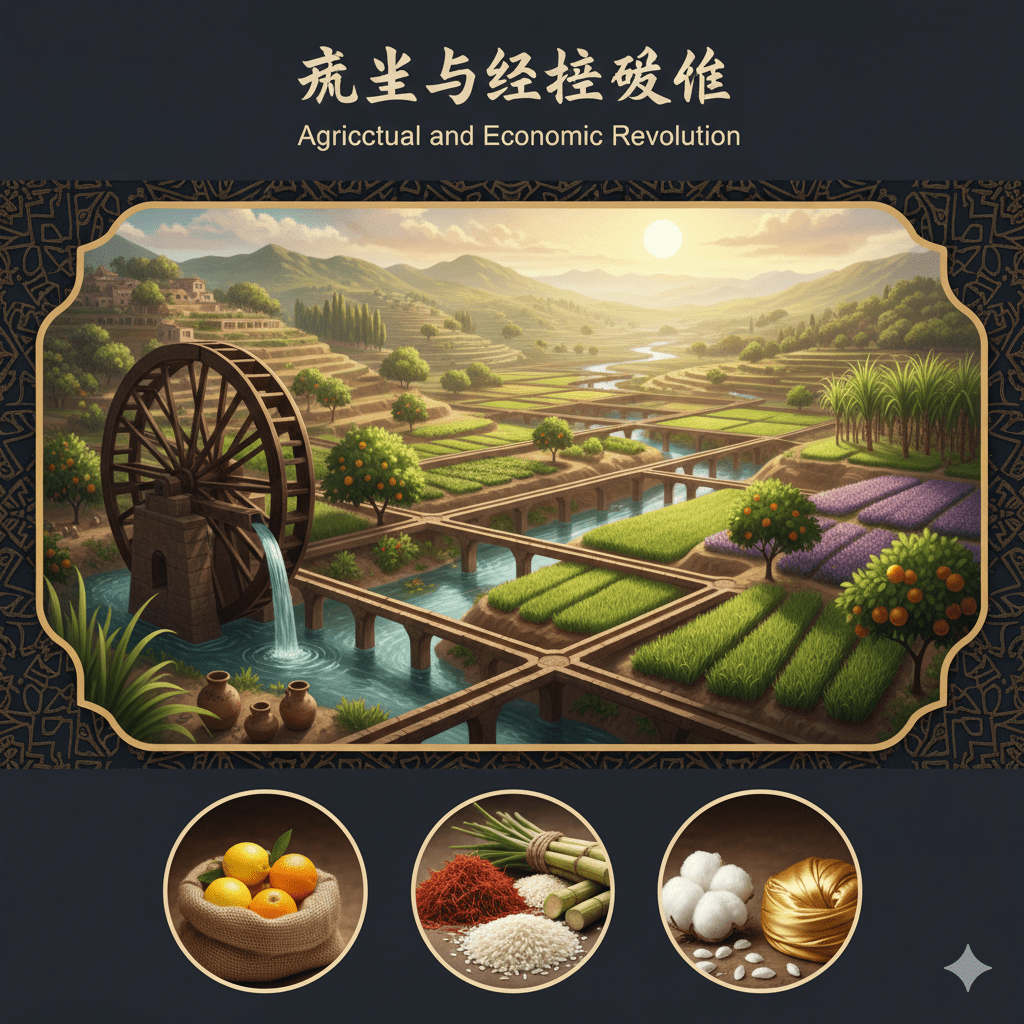
2. The Moors transformed the Spanish landscape through sophisticated engineering. They introduced the noria (water wheel) and complex irrigation systems that turned arid plains into lush orchards. 农业与经济革命 (Agricultural and Economic Revolution)摩尔人通过复杂的工程技术改变了西班牙的景观。他们引入了“诺里亚”(水车)和复杂的灌溉系统,将干旱的平原变成了郁郁葱葱的果园。
They also introduced a variety of crops that are now staples of the Spanish identity, including:他们还引入了多种现在已成为西班牙特色主食的农作物,包括:
棉花和丝绸 (Cotton and silk)
棉柑橘类水果(柠檬和橙子)(Citrus fruits (lemons and oranges))
水稻、甘蔗和藏红花 (Rice, sugarcane, and saffron)
棉花和丝绸 (Cotton and silk)
3. 建筑与城市生活 (Architecture and Urban Life)
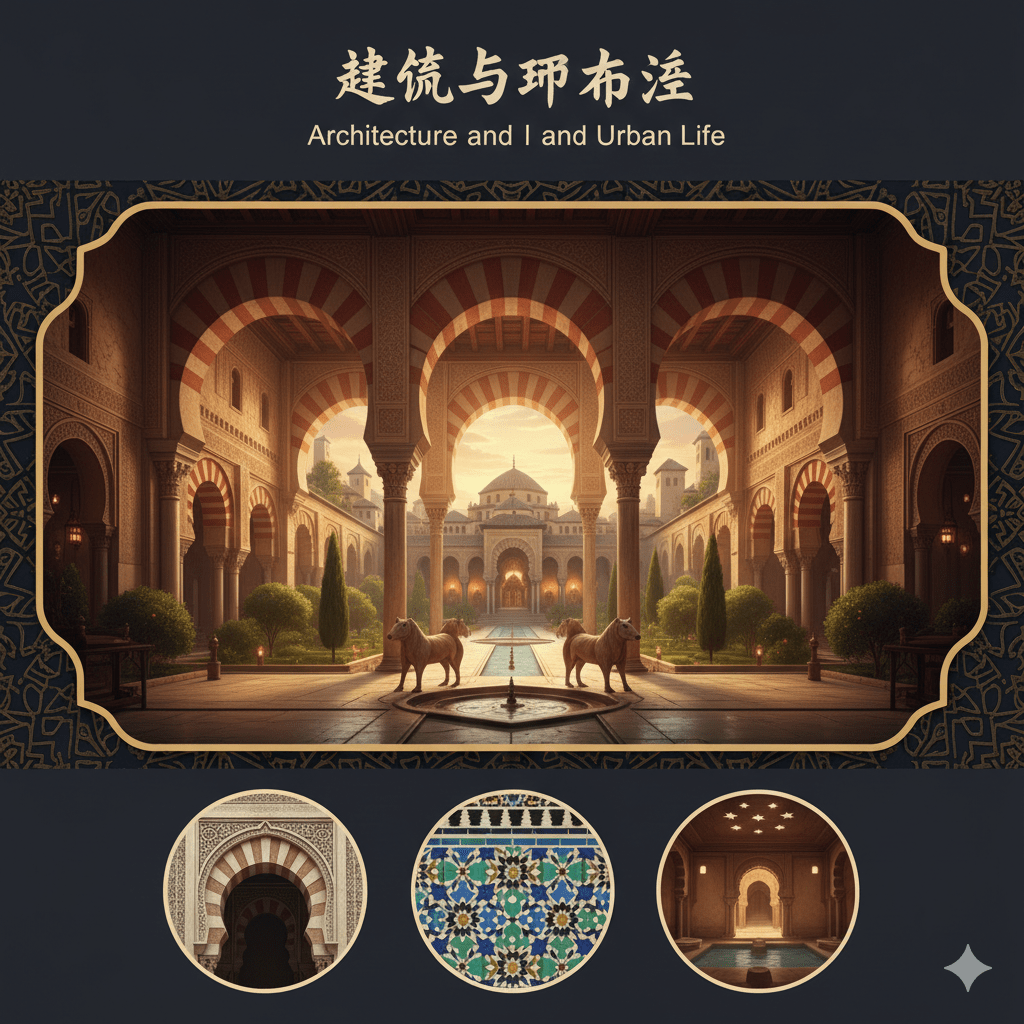
Moorish architecture is perhaps the most visible legacy of this era. Cities like Córdoba, Seville, and Granada became urban marvels with paved streets, street lighting, and public baths—luxuries unheard of in Paris or London at the time. 摩尔建筑或许是这个时代最明显的遗产。科尔多瓦、塞维利亚和格拉纳达等城市成为了城市奇迹,拥有铺砌的街道、街灯和公共浴室——这在当时的巴黎或伦敦是闻所未闻的奢侈品。
Architectural hallmarks include the horseshoe arch, intricate muqarnas (honeycomb vaulting), and the use of geometric tilework (azulejos). The Great Mosque of Córdoba and the Alhambra Palace remain world-class examples of this aesthetic, emphasizing the “paradise on earth” concept through the use of running water and enclosed gardens. 建筑特色包括马蹄形拱门、复杂的穆卡纳斯(蜂窝状拱顶)以及几何瓷砖(彩釉砖)的使用。科尔多瓦大清真寺和阿尔罕布拉宫至今仍是这种美学风格的世界级典范,通过流水和封闭式花园强调“人间天堂”的概念。
4. 语言与文化 (Language and Culture)
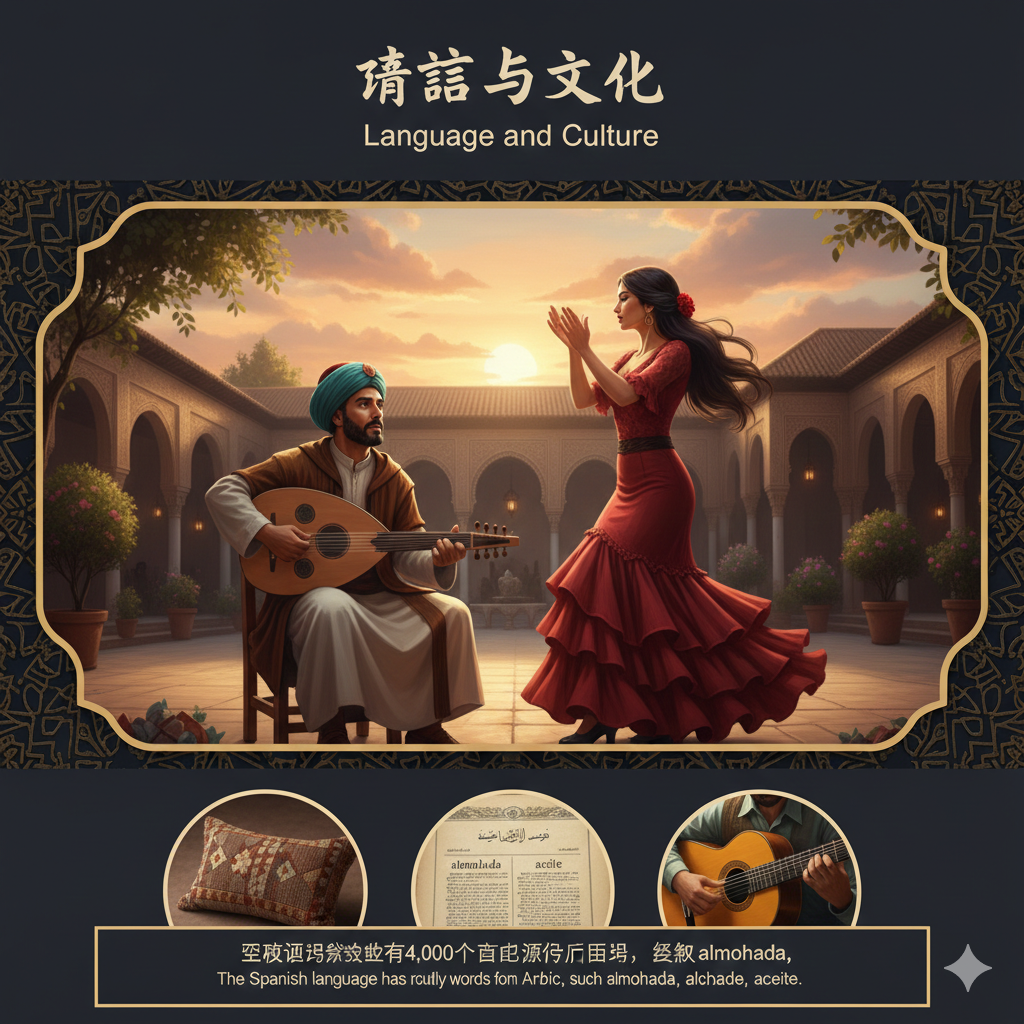
The Spanish language is a living record of this occupation. Roughly 4,000 words (about 8% of the Spanish dictionary) are derived from Arabic. Most words beginning with “al-” (the Arabic definite article) share this origin, such as almohada(pillow), alcalde (mayor), and aceite (oil). 西班牙语是这段占领时期留下的活生生的记录。大约有4,000个单词(约占西班牙语词典的8%)源自阿拉伯语。大多数以“al-”开头的单词(阿拉伯语的定冠词)都源于此,例如 almohada(枕头)、alcalde(市长)和 aceite(油)。
Cultural contributions also extended to music; the introduction of the oud (a precursor to the modern guitar) laid the groundwork for what would eventually become Flamenco. 文化贡献也延伸到音乐领域;乌德琴(oud,现代吉他的前身)的引入为后来弗拉门戈音乐的发展奠定了基础。